
In a world beset by disruption and climate change, fantasy provides the Other with a voice to explain itself, for both humans and non-humans. Magic is the ‘membrane’ that transports the reader from one experience to the next, from reality to a world of magic where anything is possible. To authors Alan Moore and Susanna Clarke, fantasy enables us to say what we can’t easily elucidate in the real world. A well-written story can change the world.

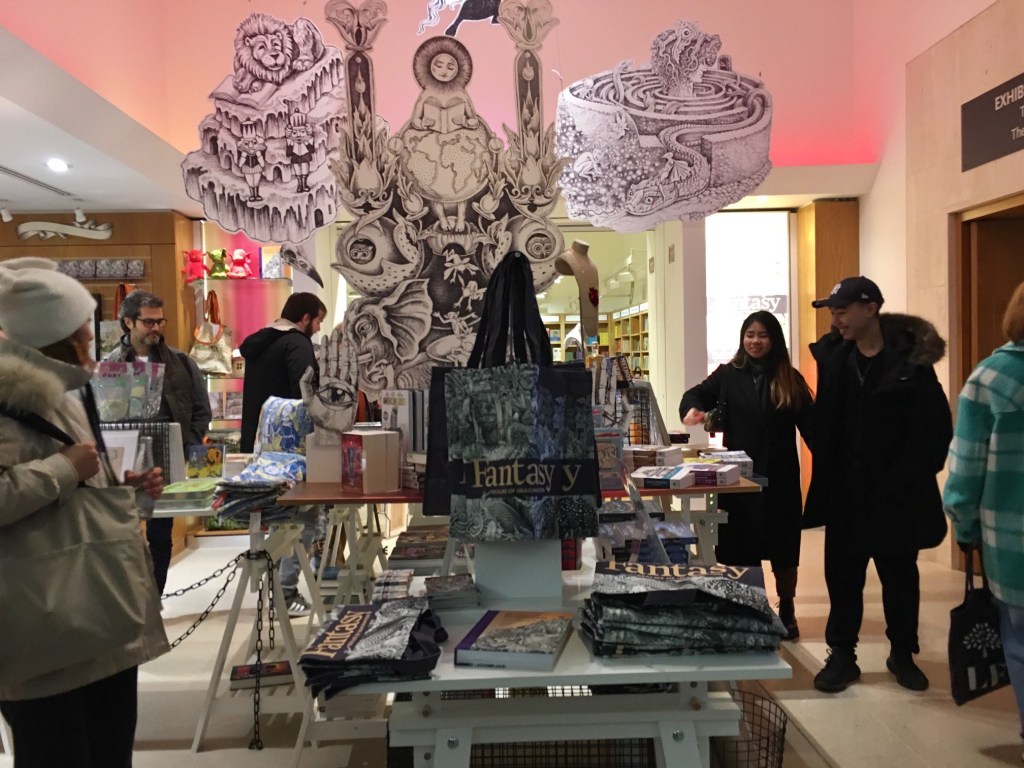
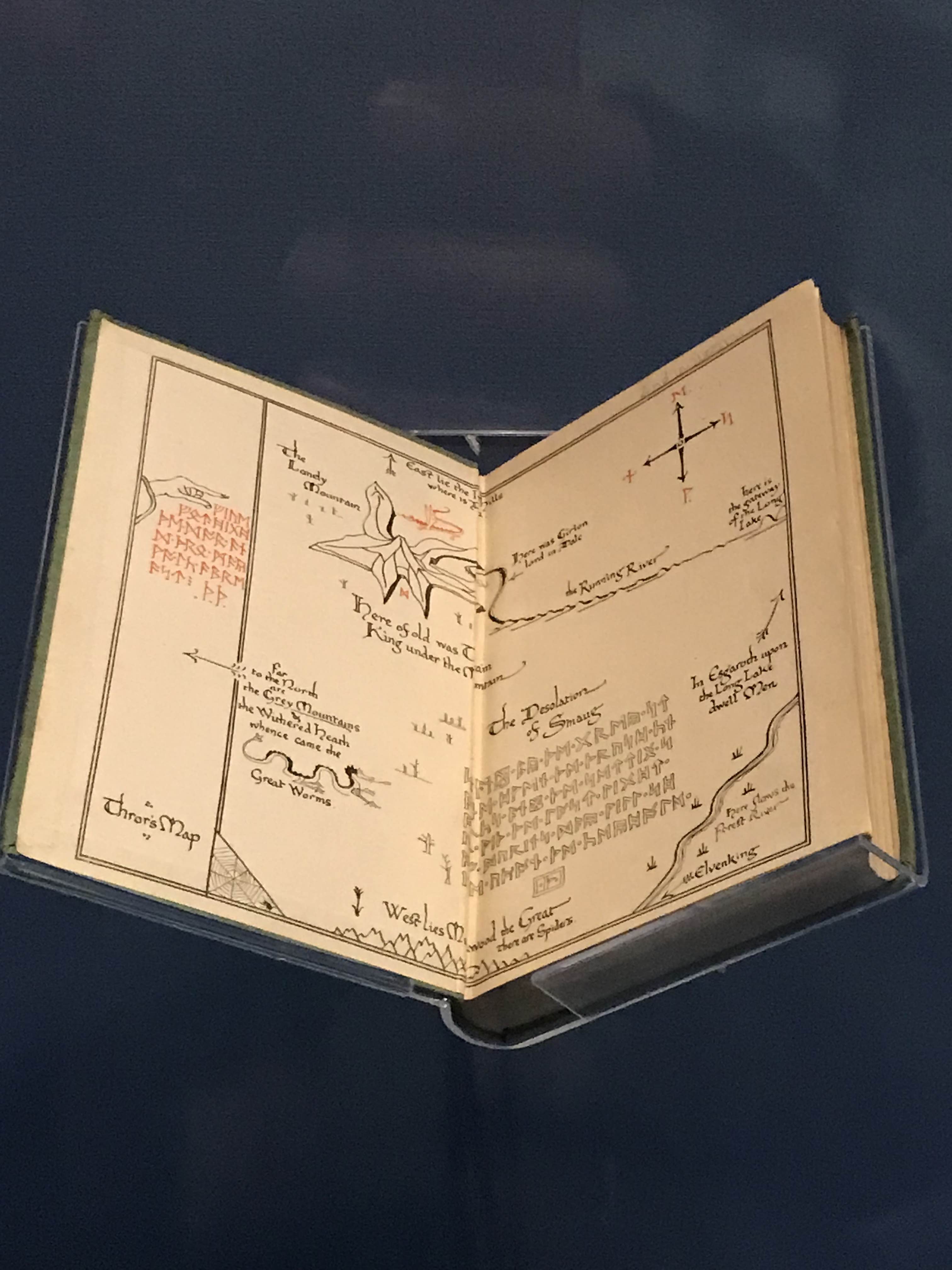
The British Library exhibition, Fantasy: The Realms of Imagination, will conclude on 25 February 2024. For fantasy fans, the exhibition acknowledges that fantasy has the same standing as any other literary genre. For fantasy authors, the event validates their work: fantasy and all genres within it aren’t simply ‘pop culture’. They have a place in English Literature.
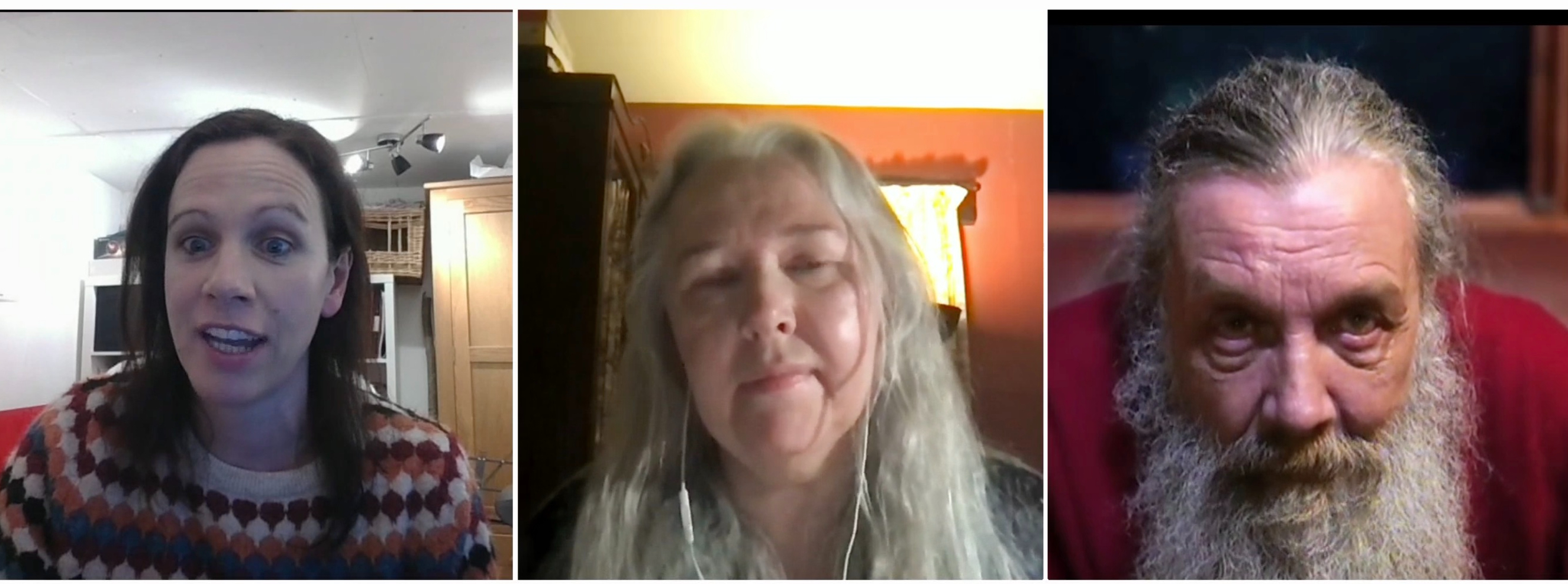
On 11 January 2024, the British Library hosted a webinar with authors Susanna Clarke (Jonathan Strange and Mr Norrell) and Alan Moore (V For Vendetta). The moderator, Alison Flood, asked what drew them to the genre. The next 90 minutes were filled with revelations and insight into a genre that is so important in helping us to empathise and discover our commonality with others.
The books of joy
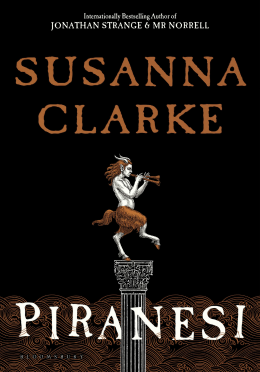
“What books can you trace your joy to?” Flood asked the authors. Moore said books in common with Susanna Clarke’s Piranesi and Mervyn Peake’s Gormenghast that create a metaphysical architecture make an impact on him. He explained: “There are places in the real world I’ve forgotten about but I remember a fantasy place. A brilliant fantasy constructs itself in the reader’s mind. Gormenghast was the book that first alerted me to what could be done with writing.”
“It’s nerve-wracking writing a book and filling it with pages and pages of description of a statue; you think no one’s gonna read it,” Clarke said. “But some readers would be happy Piranesi is nothing but description. Looking back at my childhood, the Narnia books made me completely at home. Not that fantasy literature is any different; I just felt more at home. It made more sense to me. In my teenage years, I read Ursula Guin’s Earthsea. My life as a teenager (oscillate between) two poles: church and school. Both space requires you to behave and believe in a particular way. Books like Earthsea made a place for my emotion. If I look not so much to architecture but to the landscape, I know that place. I felt that I’ve walked there.”
The appeal of fantasy
Clarke revealed that originally, she was writing detective novels but found that she couldn’t do it. “My mind doesn’t work that way,” she said. “All this eerie atmosphere came in, surrealism kept drifting in. What I started writing that became Dr Strange & Mr Norrell.”
Fantasy was always something where Moore would be invested. He started out with devouring magical stories and mythologies such as the Norse folktales. “I thought things that can’t possibly happen have got to be the most attractive, wonderful things of all,” he said. “Fantasy is a very big word but it’s a kind of mother genre that can include science fiction, horror and the rest of it. But it has to be good fantasy.”

Moore revealed that he ordered Earthsea for his grandson. “I read that in my twenties. There’s something so human about the characters irrespective of the world they’re in. All fantasy has to be grounded somewhere, in dreams or emotions, otherwise it won’t be that wonderful kind of sanctuary… I prefer it if there is some connection, just connecting to the human experience, but also taking it to an imaginative space.”
He elaborated: “I tend to like old, weird fantasy books. Fantasy can be an awful lot of things. What I object to is when people insist on everything. It’s a much bigger word than people give it credit for.”
“All fantasy has to be grounded somewhere, in dreams or emotions, otherwise it won’t be that wonderful kind of sanctuary.”
Comics and the fantasy genre
Not surprisingly, Clarke revealed that in the 1960s and 1970s, as a girl, she wasn’t encouraged to read comic books. She bought her first comic book, an Alan Moore title called Watchmen at the Forbidden Planet bookshop at Covent Garden, where she worked. The graphic novel impressed her.
She said: “It wasn’t just imagination, it was operatic, with so many things going on. It’s difficult to do it in prose. In a graphic novel, the speech is doing one thing, the image is doing another. I wouldn’t dare try it in prose… You can do an opera (with graphic novels) because you can have people singing different lines, you can follow the individuals. In prose, it gets embarrassingly tricksy quickly.”

“In a graphic novel, the speech is doing one thing, the image is doing another. I wouldn’t dare try it in prose… You can do an opera (with graphic novels) because you can have people singing different lines, you can follow the individuals. In prose, it gets embarrassingly tricksy quickly.”
“Comics are behind me,” Moore responded. “I’m persuaded that the prose is so eloquent, elegant. From that, you can create a universe. With comics you can get underliers: dialogue, caption, pictures and symbols in pictures that can have their own narrative.
“You can use comics in a more subtle way. You can have a juxtaposition of what you have in pictures. For example, you have a repressed couple having a boring conversation, and you have their shadows behaving orgiastically, whilst talking about everyday things, although they don’t like each other much. (But) thank you for that assessment, Susanne.”
Clarke observed: “When you do comics, people hold you responsible for comicdom. You don’t get held responsible for English Literature.”
Moore agreed. He said: “Even when I try to distance myself from comics, it’s always, I know, the first sentence will be the Watchmen. That doesn’t happen in literature.”

“When you do comics, people hold you responsible for comicdom. You don’t get held responsible for English Literature.”
The workings of literary magic
The moderator asked how the authors make their magic work. “I didn’t,” Clarke confessed. “The film director asked me. I said I don’t know.” She described it as ‘literary magic’. Her book is about the English landscape. She spent half of her life in the northern half of England, and the strength of folklore such as fairy tales fascinates her. “The magic represents the spaces between systems, disciplines and experiences we have that we can’t quite elucidate or describe,” she opined. “They’re the spaces that slip from our mind, which we can’t describe in words. Like the landscape, animals or something. It’s the bit of our experience that feels deeply connected but can’t link to a system of philosophy.”
“Magic is a point of transition from one system to another,” said Moore. “In fiction, just the word ‘magic’ will allow you to do anything because nobody knows what magic really is. It’s not like everybody is handing out diplomas. Magic is entirely a thing of the mind. I can’t do anything in the physical world but look at what I can do in the literary world. Magic became more like something that grows out of the landscape itself. Places we inhabit, they are all magical places.
“Magic is a point of transition from one system to another. In fiction, just the word ‘magic’ will allow you to do anything because nobody knows what magic really is. It’s not like everybody is handing out diplomas. Magic is entirely a thing of the mind.”
“Over the course of centuries, they’ve become disenchanting. We walk down the modern street day after day, and we become disenchanted. It’s possible through writing to re-enchant. It’s possible to create this fantastic other world in people’s heads. Or make the existing real world magical. In a way, they’re as real and as important, perhaps more important, than brick and mortar. When we think of spaces, we think about our emotions, our fantasies.”



Making the ordinary magical
Moore then went on to explain how he made Jerusalem, a deprived area in Northampton where he grew up, magical. It’s also the title of his novel, Jerusalem. “Very little of that book is made up. All the characters and events were as they happened with a certain cast that can be seen as a magic book. People saw the street, and they went: oh, that’s the street in Jerusalem. In Victorian London, we think about Charles Dickens. Fiction becomes places they talk about.”
Fantasy fiction is about modifying reality. Moore expounded: “Everything in the material world comes from someone’s imagination. A ‘membrane’ between things that don’t happen, things that do happen, fact and fiction, semi permeable. Sometimes things slip through, and people who are real end up as fiction. It can happen. Things that only exist in fiction that go through the ‘membrane’ become the real world. I don’t think this world will function, or we would function, without this fantasy component, whether it’s in our dreams at night…”



Giving a voice to the Other
Clarke emphasised that fantasy is hugely important with regards to climate change and disasters. The genre is good at the Other, in humanising the non-humans, the devil, the landscape and the animals, taking us out of the “21st Century head”. She said: “History can do this but fantasy can give another possibility to the non-human.”
Moore agreed that fantasy is what we need in saving the world. “Imaginary structures make up the material world. We have to find a way to see a new world and imagine one,” he rationalised. “Nobody should ever underestimate a well-written sentence or passage. They can change the world in a small way, if only in a reader’s mind.”
For his novel, V for Vendetta, he wrote of security cameras that could talk and that’s now a reality. He emphasised: “Words can change things. Fantasy can develop the human imagination. It’s a human muscle. We have to develop it.”
“Nobody should ever underestimate a well-written sentence or passage. They can change the world in a small way, if only in a reader’s mind.”


 Story Of Books
One response to “A well-written story can change the world, if only in a reader’s mind”
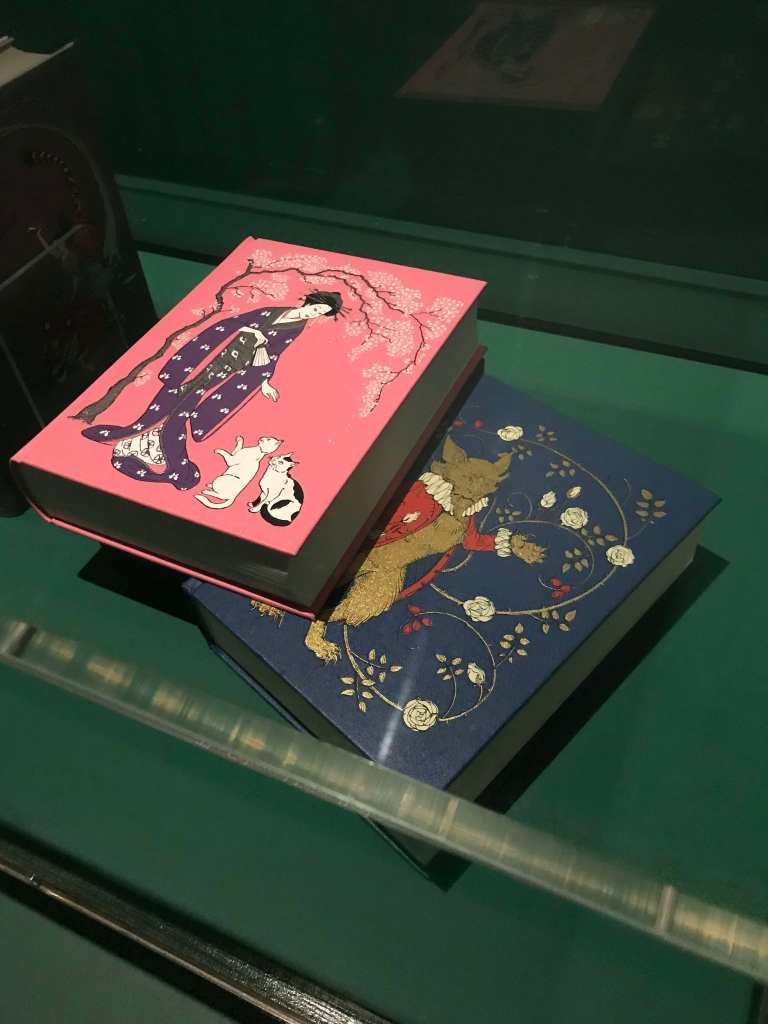
[…] will be impacted by the US tariff. Pictured: The 2023 Fantasy exhibition at the British Library (A well-written story can change the world, if only in a reader’s mind). Image: ©Story Of […]