
- Panel: Word on the street.
- Moderator: Regina Ibrahim.
- Panellists: Clément Baloup, Ong Chin Huat and Shih-Li Kow.
“Word on the street” was the 2024 theme for the George Town Literary Festival (GTLF 2024) in Penang, Malaysia. The literary panel dedicated to this topic discussed gossip, hearsay and anecdotes as a powerful narrative tool in fiction. It didn’t examine gossip in terms of point of view (first-, second- and third-person narration), and therefore less technical than the MCM Comic Con’s panel on writing epic fantasy. But it gave the audience a good idea on how to approach what writers call ‘the source’.
We attended the panel discussion on 30 November 2024 to learn how the unprescribed channel of information is used to develop a story.

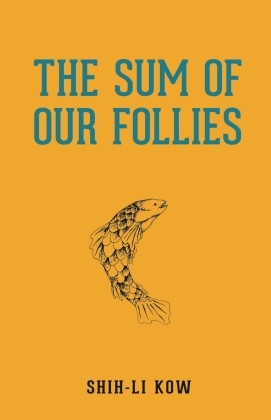
Shih-Li Kow, author of The Sum of Our Follies, likened gossip to “news running ahead of itself in a red satin dress” – a famous quote by journalist Liz Smith. It allows subordinates and the anonymous to have a platform for their voice, social media being a good example.
The source as privileged information
Our take on this is that journalism – the other form of storytelling – places a big emphasis on the validity of the source. In that sense, it can’t rely on gossip or words on the street. But like the fiction author, a journalist protects his source. Withholding source or privileged information can lead to the journalist being held in contempt of court. The author works in a similar way. His sources are privileged information, but characters and situations are fictionalised, if not anonymised. If he gets asked where he gets his story from, he can just say: word on the street.
The author works in a similar way. His sources are privileged information, but characters and situations are fictionalised, if not anonymised.
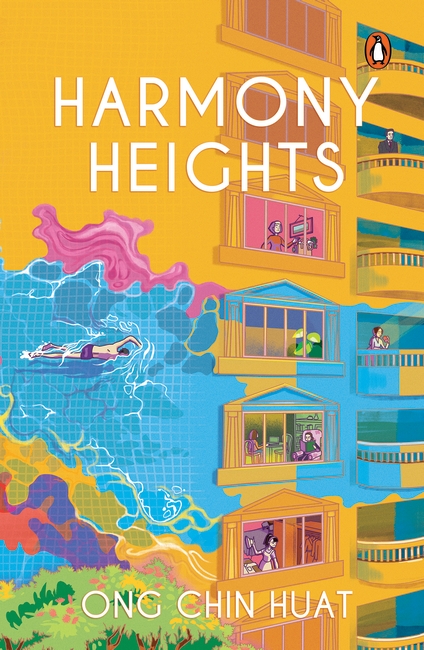
Ong Chin Huat, former editor of Tatler Hong Kong and author of Harmony Heights, touched on this a bit. He’s seen many things as a journalist. His book, an observation of high society, is definitely not a self-help book. The characters and plot are inspired by what he’s experienced but they’re not really about actual people or events.
The importance of attribution
Clément Baloup, author of the French graphic novel series Vietnamese Memories, warned the audience about the danger of gossip. In wartime, gossip is a matter of life and death, he said, alluding to his works on wartime Vietnam. The wrong information can get a person in trouble.
Baloup’s warning reminds us of the European journalistic premise in maintaining rigour: the corroboration of facts, even in fiction. The source is important because of the credibility and the impact it lends to the story. Attribution, therefore, is very crucial in fiction, even if not as stringent as academic attribution.
In wartime, gossip is a matter of life and death.

Editing adds rigour to the story
In anthropology, one can obtain data through gossip but that gossip cannot be the cathedral over which one’s theory or even assumption is built. Anthropologists put a lot of stock in ethnography and what constitutes good ethnography: the length of time taken to observe, the validation of primary and secondary data, peer review and so on. Word on the street alone, as source, won’t do but it can be a starting point.
Word on the street alone, as source, won’t do but it can be a starting point.
But does that mean fiction can get away with rigour with regards to source, unlike journalism and anthropology? Well, the editing process can maintain rigour in the fiction. Ong, a seasoned editor, eliminates the unnecessary details for his book. He told the audience that he only keeps what’s relevant to his story. History, he maintained, is also a good source for a story.
The strength of satire: a French perspective
During the Q&A session, Story Of Books asked Baloup about satire in French comic books. France has a strong visual tradition of satire, informed by the word on the street – like Hogarth was to the British. Satire drives the genre. How do the French come up with such courage when it comes to satire in comic books? The publisher’s office gets attacked and still, the comic artists publish artworks that challenge the readers to think. Baloup said comic books are a habit instilled in the French since childhood. The comic books ask questions; they don’t give answers. The comic books don’t tell kids what to think; they are a tool that kids use to think.
The comic books don’t tell kids what to think; they are a tool that kids use to think.
Similarly, that’s the function of the word on the street. It gets the author thinking on what to carefully contextualise for his story.
About the authors
- Clément Baloup (Simon & Schuster)
- Ong Chin Huat (Penguin Random House)
- Author website: Shih-Li Kow
- Regina Ibrahim (Riwayat)
More on the George Town Literary Festival 2024
- GTLF 2024: A case for scaling up Mahua Literature (5 December 2024)
- GTLF 2024: Immersing the reader with places and memories (6 December 2024)




 Story Of Books
3 responses to “GTLF 2024: How to use word on the street to shape your story”
[…] GTLF 2024: How to use word on the street to shape your story (Story Of Books, 4 December 2024) […]
[…] GTLF 2024: How to use word on the street to shape your story (4 December 2024) […]
[…] GTLF 2024: How to use word on the street to shape your story (4 December 2024) […]