

- Panel: Jalan & Ingatan (Streets & Memories).
- Moderator: Fahmi Mustaffa.
- Panellists: Hafiz Hamzah, Editor, Jurnal Svara; Abdullah Hussaini, author; Qurratul‘Ain, poet.
A story, be it a short story, a novel or a poem, must have believability. The longer the form, the deeper the immersion. The writer must not lose his reader in that journey of storytelling. The panel Jalan & Ingatan (Streets & Memories), held on 30 November 2024 at the George Town Literary Festival and moderated by author Fahmi Mustaffa, discussed the literary devices of place and time that sustain the reading experience.

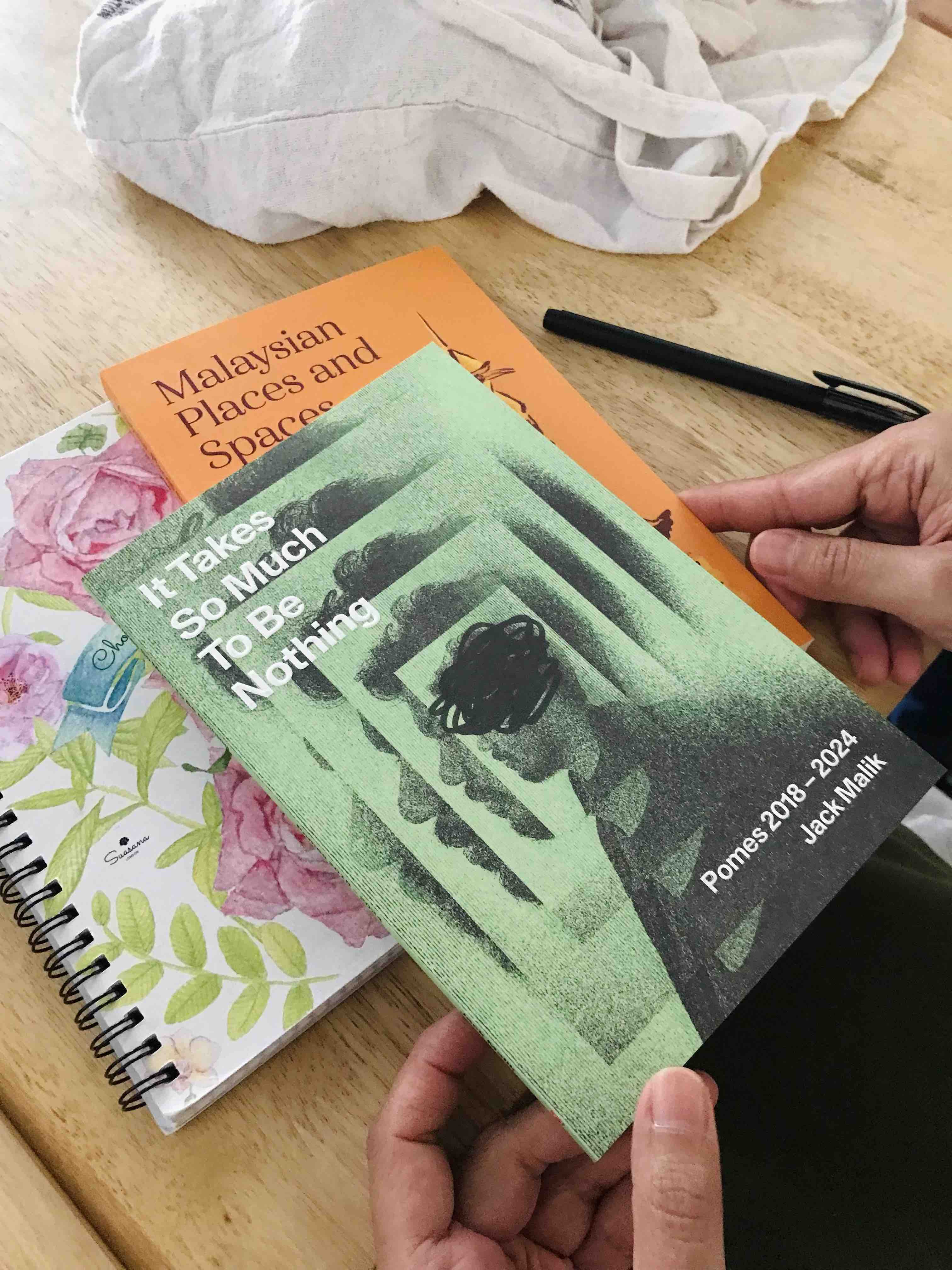
Weeks before this event, we covered the launch of the poetry anthologies Malaysian Places and Spaces and Merabak Sembah at Kalam Kreatif KL. It was intriguing to see Malaysian poets mapping out the landscape of Malaysia Madani (Civilised Malaysia) in a louder, more individual and ecological voice. It felt like we were witnessing the reconfiguration of the country’s literary landscape. The 30 November event was our follow-up to that book launch.
In that session, Mustaffa asked the panellists of Jalan & Ingatan how they create memory as well as the intended perception of the places they describe. For example, the ‘progressive urban environment’ trope and the ‘backward backwater rural area’ trope.
The dialect is a landscape
That topic eventually led to a discussion about the making of place and memory using Malay dialects. Hafiz Hamzah questioned the hegemony of Bahasa Malaysia – the official language and the received pronunciation – in Malaysian poetry. He wondered why not more poems are written in local dialects. “Dikir barat sounds better in dialect”, he pointed out. Dikir barat to those unfamiliar with this traditional form of poetry is group singing in poetic format popular in Kelantan and Southern Thai.
The hegemony of an official language as a literary medium could inadvertently erase the sense of place. A dialect preserves not just the place but also the memory of a people. That’s the paradox of such a medium, not exclusive to Bahasa Malaysia: it gives shape and voice to a nation’s identity, but it can also overshadow the ethnic tongues.


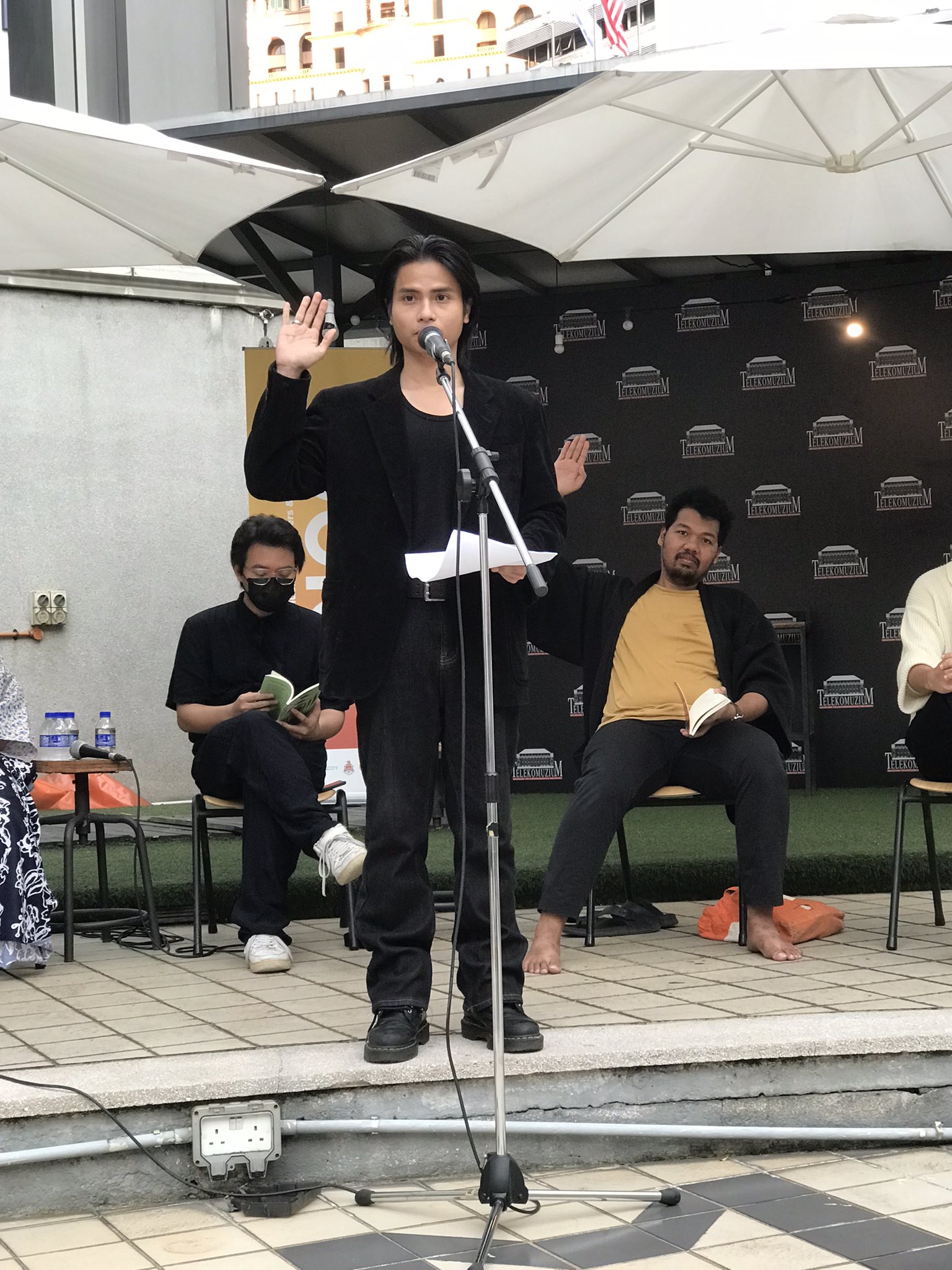
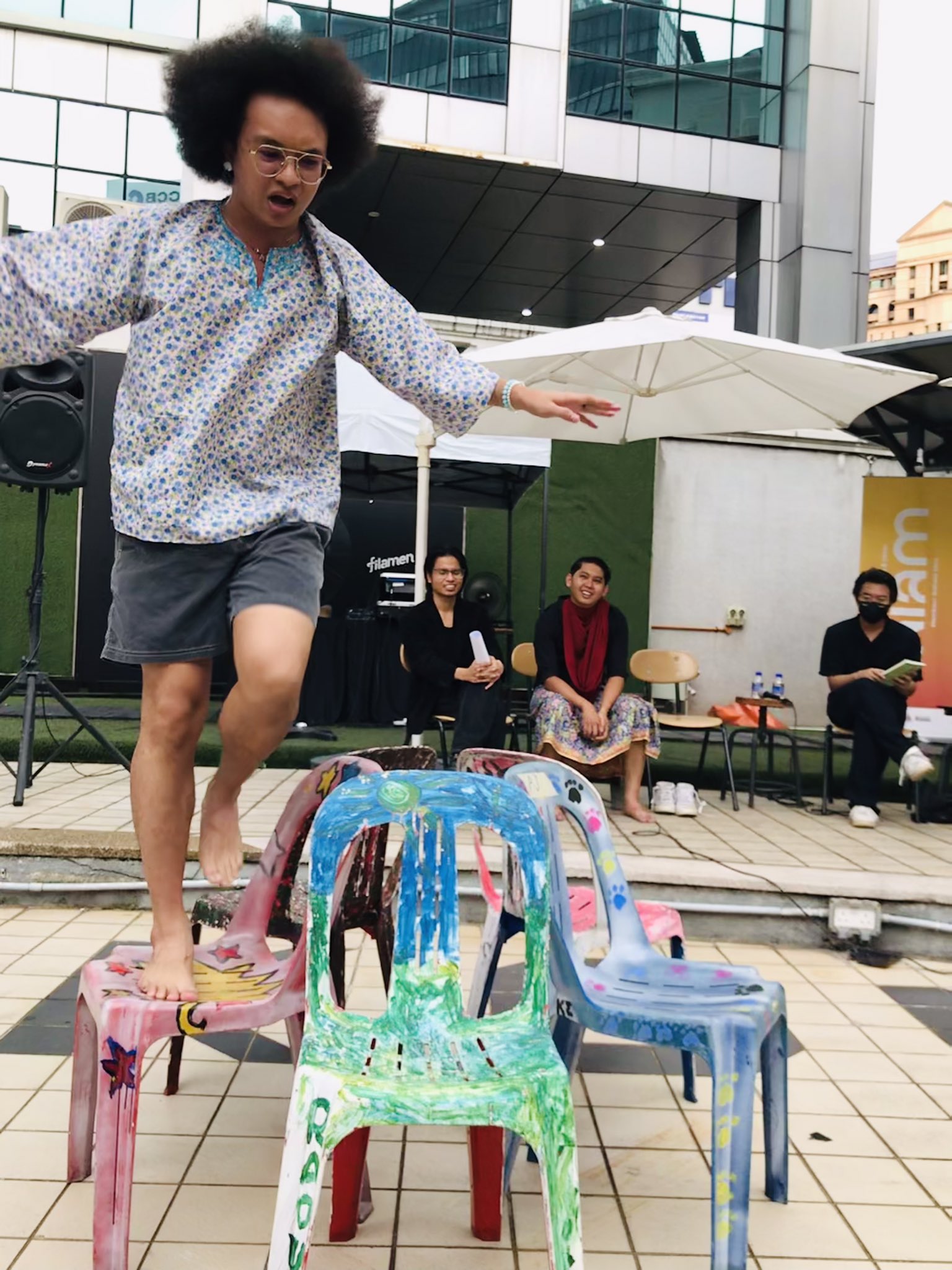
The hegemony of an official language as a literary medium could inadvertently erase the sense of place.
The narrative as a sense of place
Another angle discussed was the narrative as a sense of place. In this context, the use of stream of consciousness in poetry. Mustaffa asked poet Qurratul‘Ain how she uses the stream of consciousness for her poems. She said her poetry is like her life’s journey, with no pause or full stop. It’s a continuous flow from one moment to the next.
That conversation was significant because poetry doesn’t necessarily provide a sense of place via geographic description. It’s also done using imagery. The sense of place is rooted in the feeling of being present in the ‘here and now’. By utilising the stream of consciousness, the poet invites the reader to follow him into his world, which resides in the poet’s mind.
Poetry doesn’t necessarily provide a sense of place via geographic description. It’s also done using imagery.
Qurratul‘Ain was also asked about originality or differentiation in her works (“keaslian atau kelainan”). “One needs to be original,” she said. “It’s easier to be different.” The challenge, however, is in coming up with something new. Everything is being shared out there in the public domain, she said. Everything is experienced together, so how does one get to be original? The answer lies in interpretation. It makes all the difference, she said. She told the audience a writer can approach the same topic as everyone else but his individual take on it makes the resulting work unique.

The novel: a longer journey
The longer the medium, the more elaborate the landscape and the more impactful the memory. And in creating the novel, a hurdle awaits the writer. It’s lengthier, more difficult, with plots and chapters interspersed with many settings.
When asked about the biggest challenge faced in writing, Abdullah Hussaini said he runs out of ideas when it comes to writing a novel. The novel is too long, unlike short stories or poems, he said. It’s hard to maintain the momentum for the long form.
And in creating the novel, a hurdle awaits the writer. It’s lengthier, more difficult, with plots and chapters interspersed with many settings.
Hamzah agreed. With the essay, sometimes he feels what’s written isn’t enough. With the novel, it’s to do with the level of energy required. His problem is that he begins with energy and then runs out of steam.
We think this is a common problem faced by authors, so Hamzah isn’t alone. Also, the reader instinctively knows when the story is at its end. The author can’t stretch it any further. If it ends on page 5, not page 165, then that’s how the story runs. That energy on plot and wordplay is best saved for a universe that inhabits a short story or a poem. Perhaps an anthology of varied landscapes and experiences provide a more satisfying immersion to the reader.
About the authors
More on George Town Literary Festival 2024
- GTLF 2024: A case for scaling up Mahua Literature (5 December 2024)
- GTLF 2024: How to use word on the street to shape your story (4 December 2024)
More on KALAM Kreatif KL 2024
- Five Minutes With: Jack Malik, Poet (Story Of Books, 16 October 2024)
- Story Of Books at KALAM Kreatif KL 2024 (14 November 2024)







 Story Of Books
4 responses to “GTLF 2024: Immersing the reader with places and memories”
[…] GTLF 2024: Immersing the reader with places and memories (Story Of Books, 6 December 2024) […]
[…] GTLF 2024: Immersing the reader with places and memories (Story Of Books, 6 December 2024) […]
[…] GTLF 2024: Immersing the reader with places and memories (6 December 2024) […]
[…] GTLF 2024: Immersing the reader with places and memories (6 December 2024) […]