
Genre fictions hardest hit by US Tiktok ban
Tiktok will be banned in the US on 19 January 2025, where the app has up to 170 million users. The HR 7521 bill, passed by regulators whose average age are 64 (thank you, Dr Matt Voigts of Copyright News, for pointing that out) drew objection from the US book communities who rely on Tiktok’s Booktok to sell and discover new titles.
The Author’s Guild says that the bill, also known as the Protecting Americans from Foreign Adversary Controlled Applications Act, contradicts the First Amendment, depriving authors of a tool to generate income. The guild insists that data protection can be achieved through “comprehensive privacy legislation” but not by an act that can violate free speech.
Those hardest hit by the ban are likely to be authors of romance, fantasy and adult genres – categories easily marginalised by mainstream publishing. The ban can also result in fewer breakouts from unknown authors in a market already tough for unknowns to penetrate. Bookstores will also switch to channels such as Instagram Reels to promote their shops. Those will include giants such as Barnes and Noble. Out of 650 Barnes and Noble locations in the US, 300 have Tiktok accounts, reported Variety.
The ban can also result in fewer breakouts from unknown authors in a market already tough for unknowns to penetrate.
The ban is to happen around the time when Booktok sales by new authors have been facing a steady decline since 2022. Book fans also pointed out that Booktok doesn’t address issues within the publishing industry such as lack of diversity. Some are glad to see the back of AI-generated book covers on Booktok. For authors who don’t like the concept of ‘artist as business manager’ (read: social media influencing), the demise of Tiktok in the US hardly matters.
There has been a steady exodus of US users to Xiahongshu (Little Red Book), mainly used in China, Taiwan and Malaysia for tourism and travel. It’d be interesting to observe the new movements that result from the US book communities’ exchange with the traditional users of the Little Red Book.
Rumours of Elon Musk’s potential bid for the US Tiktok can also motivate users to leave the app. For authors, publishers and retailers who are already on Twitter, Bluesky, Tiktok and Instagram, the question is: how many more social media apps do we need to sell our books? Recently, Andy Adams, founder, FlakPhoto, announced a 2025 focus on its newsletter instead of social media (see our interview in 2019 with him).
The death of social media was predicted way back in 2019. It seemed unthinkable then. But it’s not impossible now.
Related news
- Booktok’s future hangs in the balance (Godzilla Minus One isn’t showing in Asia. So what’s the point of this fantasy? Story Of Books, 16 March 2024)
- Five Minutes With: Andy Adams, Director, FlakPhoto Projects (Story Of Books, 11 March 2019)

It Ends With Us: Let others adapt your book, or adapt it yourself?
Much is said about the legal battle surrounding the film adaptation of Colleen Hoover’s 2016 novel It Ends With Us. The latest fallout between leading star Blake Lively and director-actor-screenwriter Justin Baldoni has resulted in the latter suing the former for US$400 million. A pity because the film is a blockbuster, earning up to US$350 million globally.
Authors are curious to know: what’s going to happen to the book rights? If you successfully option your book to a film production company, and later, this type of issue arises, will future film adaptation of the novel and its sequel be locked in a legal battle? Baldoni acquired the rights to the film adaptation via his production company Wayfarer Entertainment. Hoover, the author, was the executive producer.
Still, it doesn’t affect the adaptation of Hoover’s 2022 novel Reminders of Him, to be produced by Universal. But the adaptation will be produced by Hoover’s own production company, and she gets to co-write and produce the film herself.
The Welsh ask fantasy authors to stop fetishising their culture
The influence of Welsh culture on English Literature extends beyond the fantasy model popularised by JRR Tolkien. Take the legend of King Arthur. That story began in Wales. But not all fantasy stories peppered with Celtic references are flattering to the Welsh, especially when they are taken out of context, or simply used because the Celtic words ‘sound nice’.
“There’s a pan-Celticism sort of situation that has developed in fantasy, where everybody thinks that all of that can be thrown in together – that’s Gaelic, Irish, Welsh, Manx, Cornish, the lot – and it just becomes one big amalgamation and anybody can pick anything they want out of that pot,” Prof Dimitra Fimi, a lecturer in fantasy and children’s literature at Glasgow University, told the BBC.
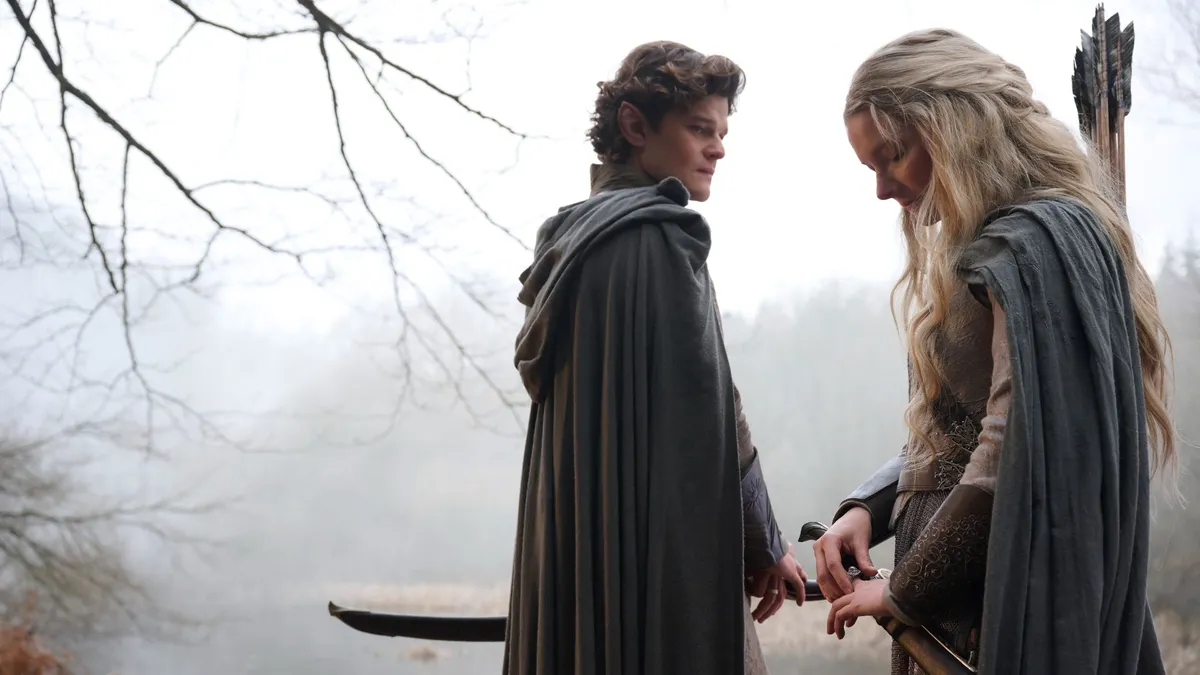
Contemporary Welsh writers such as Roahl Dahl have elevated the fantasy genre beyond the trope of fairies and elves.
Not only that, some aren’t happy with what is termed “fairy porn”: erotic romantasy largely driven by the Booktok and YA segments, which borrows heavily from Welsh culture.
Knowing the Welsh, they are generous and upright, and don’t mind authors basing a story inspired by their culture, but it has to be done with respect and care. They have a long history of independence struggles. They still retain their own language as the official medium for the country. Also, contemporary Welsh writers such as Roahl Dahl have elevated the fantasy genre beyond the trope of fairies and elves. And then there are other literary greats in contemporary literature, notably Dylan Thomas.
Admittedly, it’s not easy to appreciate the subtlety of a cultural reference if one doesn’t come from that specific culture. It took us almost three decades living in the UK to think that we can tell the difference between “Ioan”, “Iain” and “Ian” and what they mean culturally. And we could still be wrong.
Latest Muzings magazine focuses on the people of Malaysia
Issue 5 of Muzings, the annual magazine published by the Museum Volunteers, Department of Museums Malaysia, is now available to download or to be read online.
The theme for the 2024 edition is People. The 14 articles reflect the people that make Malaysia a country from the following ethnicities: Malay, Chinese, Indian and the Indigenous groups. They also focus on sub-groups such as the Kelabit of Sarawak, the Bugis (possibly the most Polynesian of the Malay groups), the Malaysian Odia community who originated from Odisha, India, and the Nepali Gurkhas. There is also a highlight on the Mongols, whom we know left a mark on the Malay Archipelago in 1293 (review: Gayatri Rajapatni, Story Of Books, 26 August 2024).
The piece that caught our attention is the article on the Malay fishermen and their belief in the supernatural forces (semangat) that ‘inhabit’ their fishing boats. It’s a contrarian take to Islam but makes for a good study on Malay hermeneutics – how they interact with objects of labour, and how their concern for the environment is expressed in belief systems and rituals.
The piece that caught our attention is the article on the Malay fishermen and their belief in the supernatural forces (semangat) that ‘inhabit’ their fishing boats.
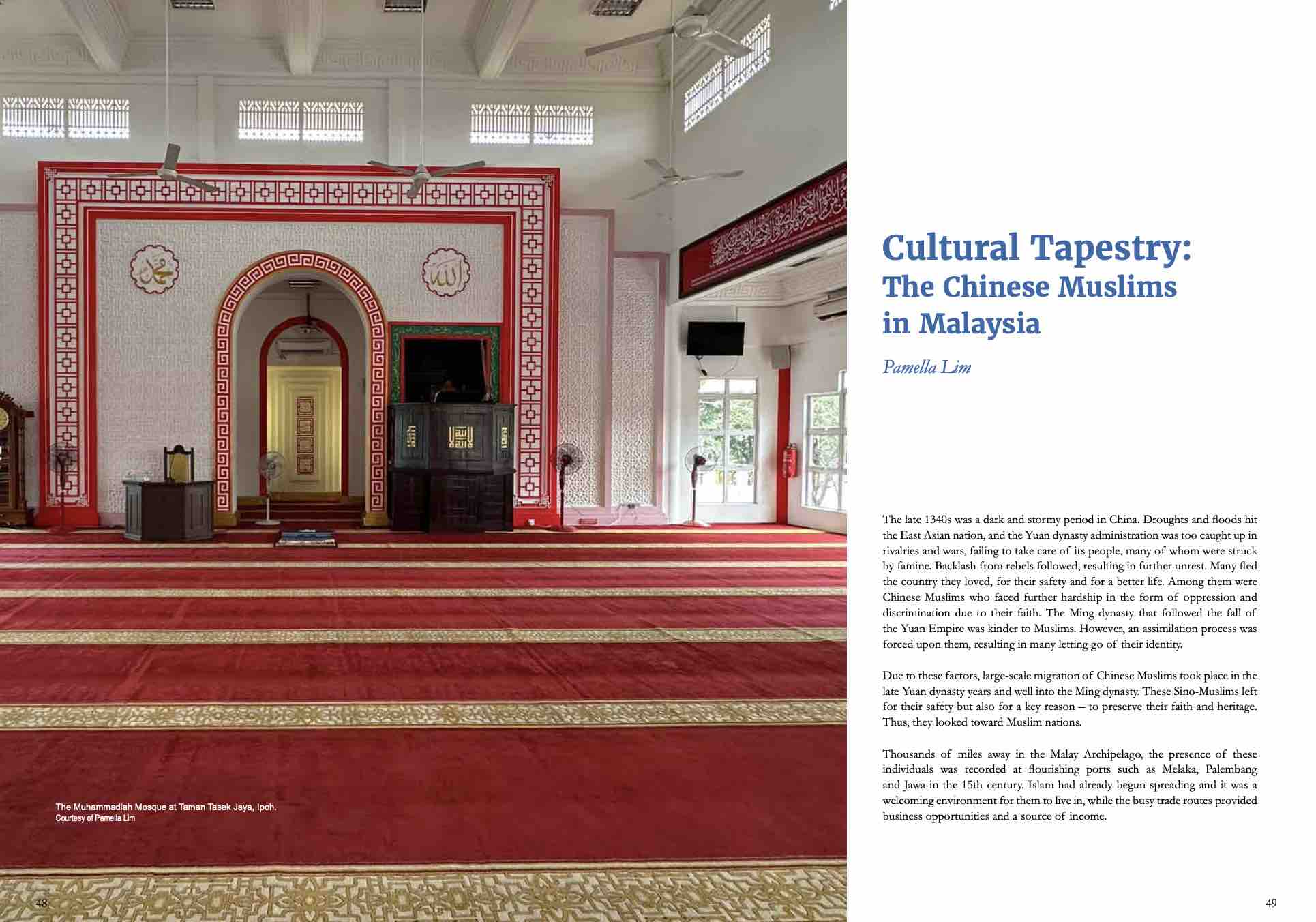
Waves of migration from China took place in different periods over centuries. The Muslim Chinese also introduced Islam to the Malay peninsula. 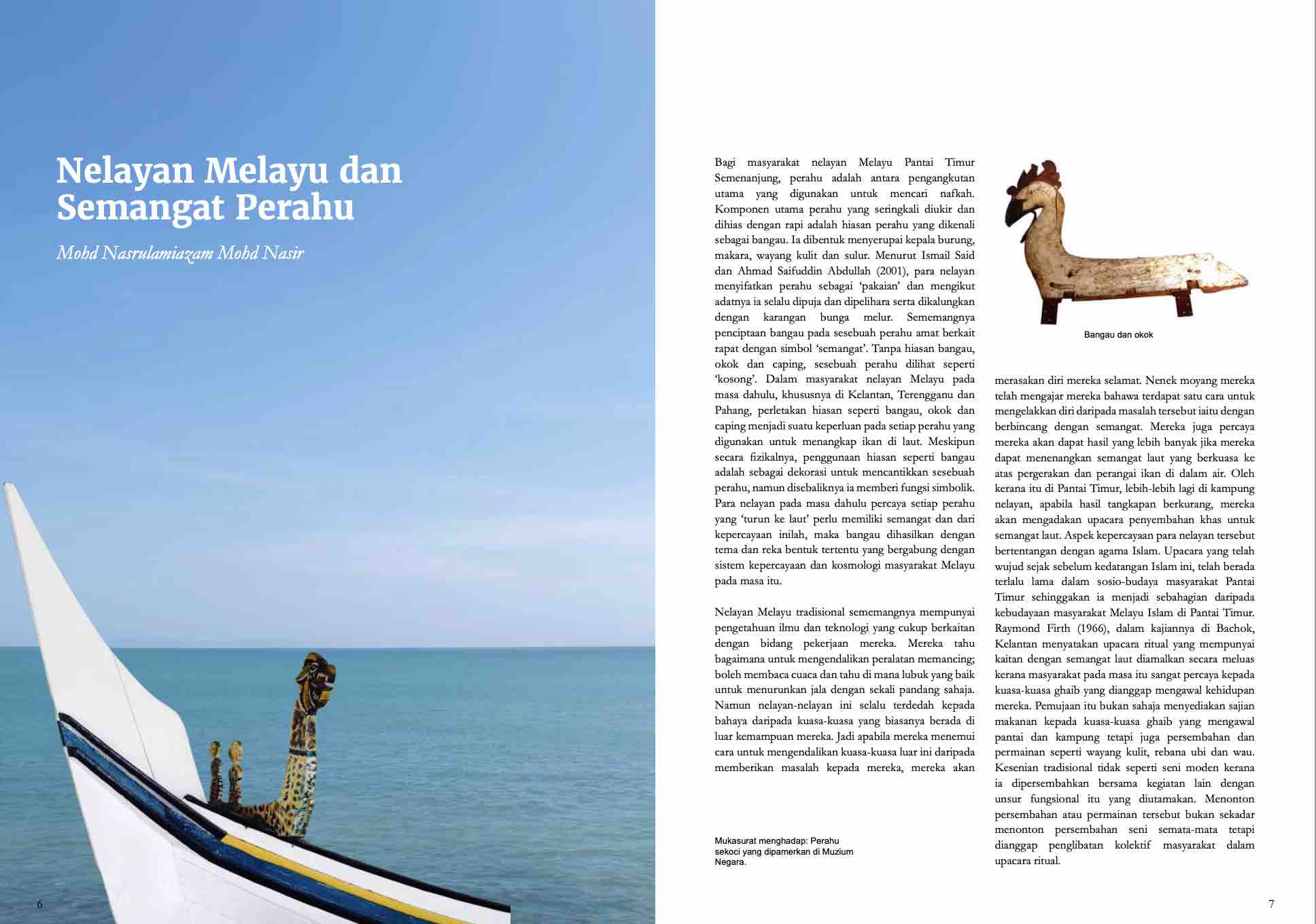
Animism is no longer practised but some Malay fishermen still see boats as living beings. 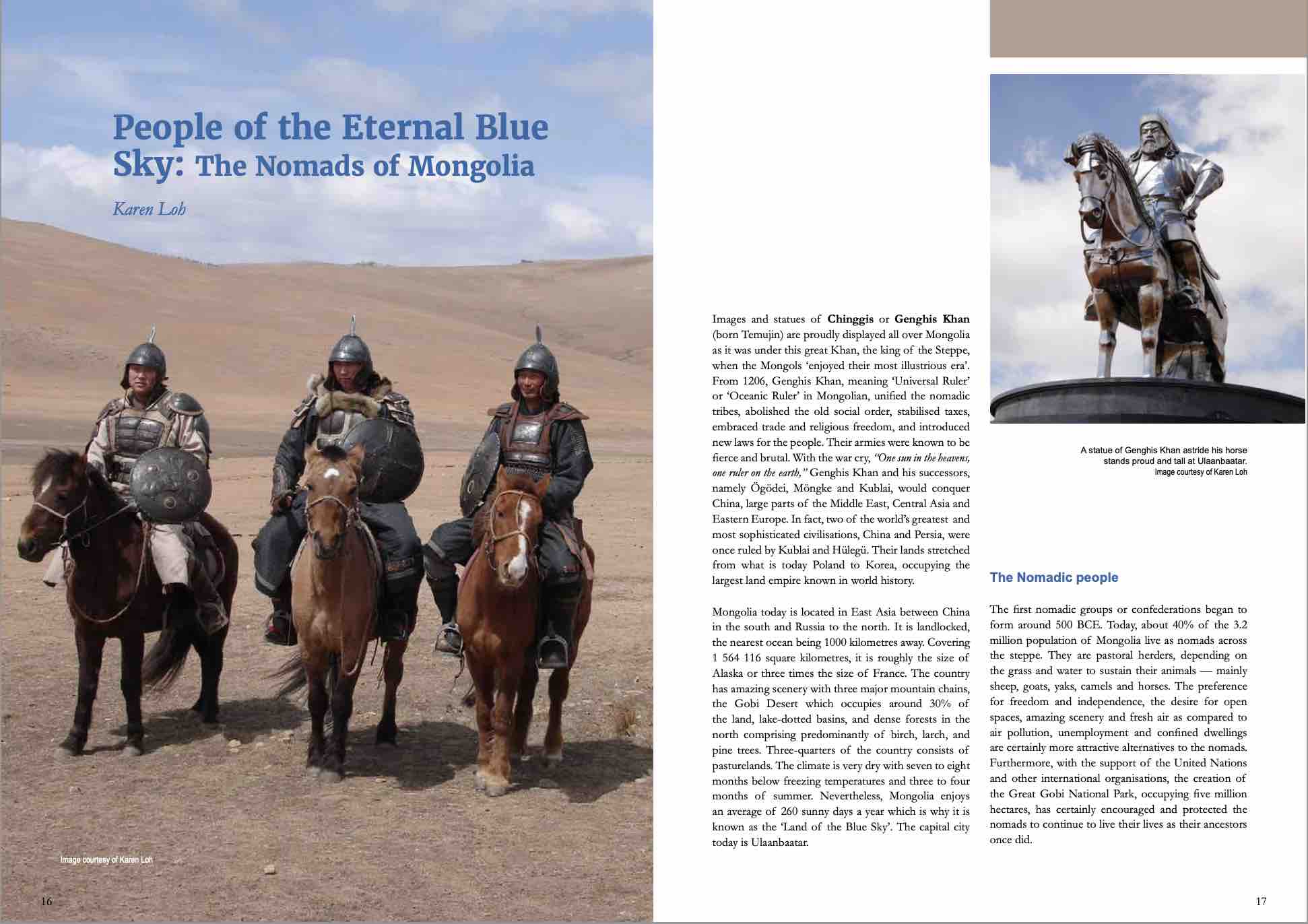
The Mongols invaded Southeast Asia in 1293. They were defeated by the Javanese, who went on to found the Majapahit Empire. 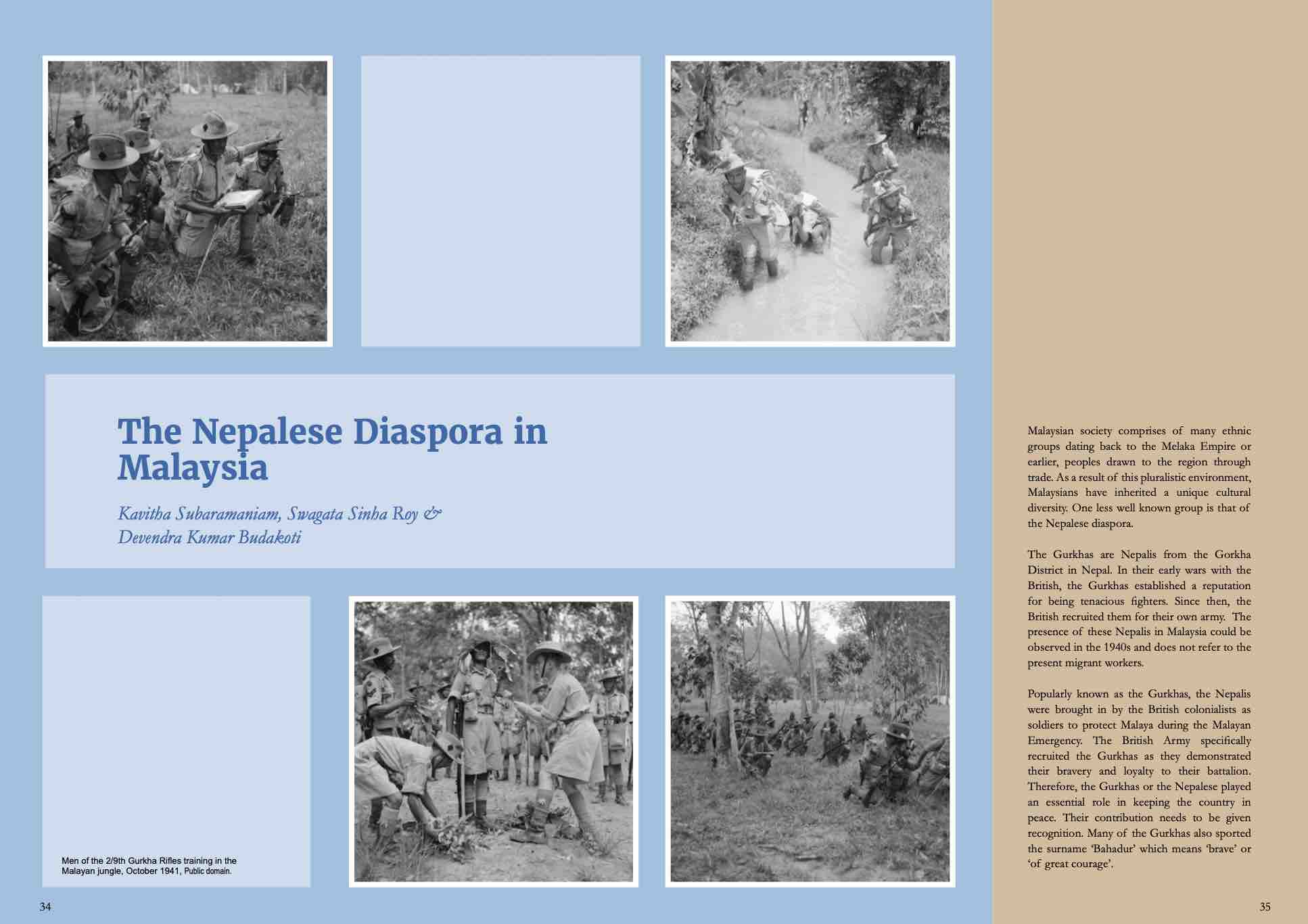
The Nepalese has a history defending the country during World War 2. 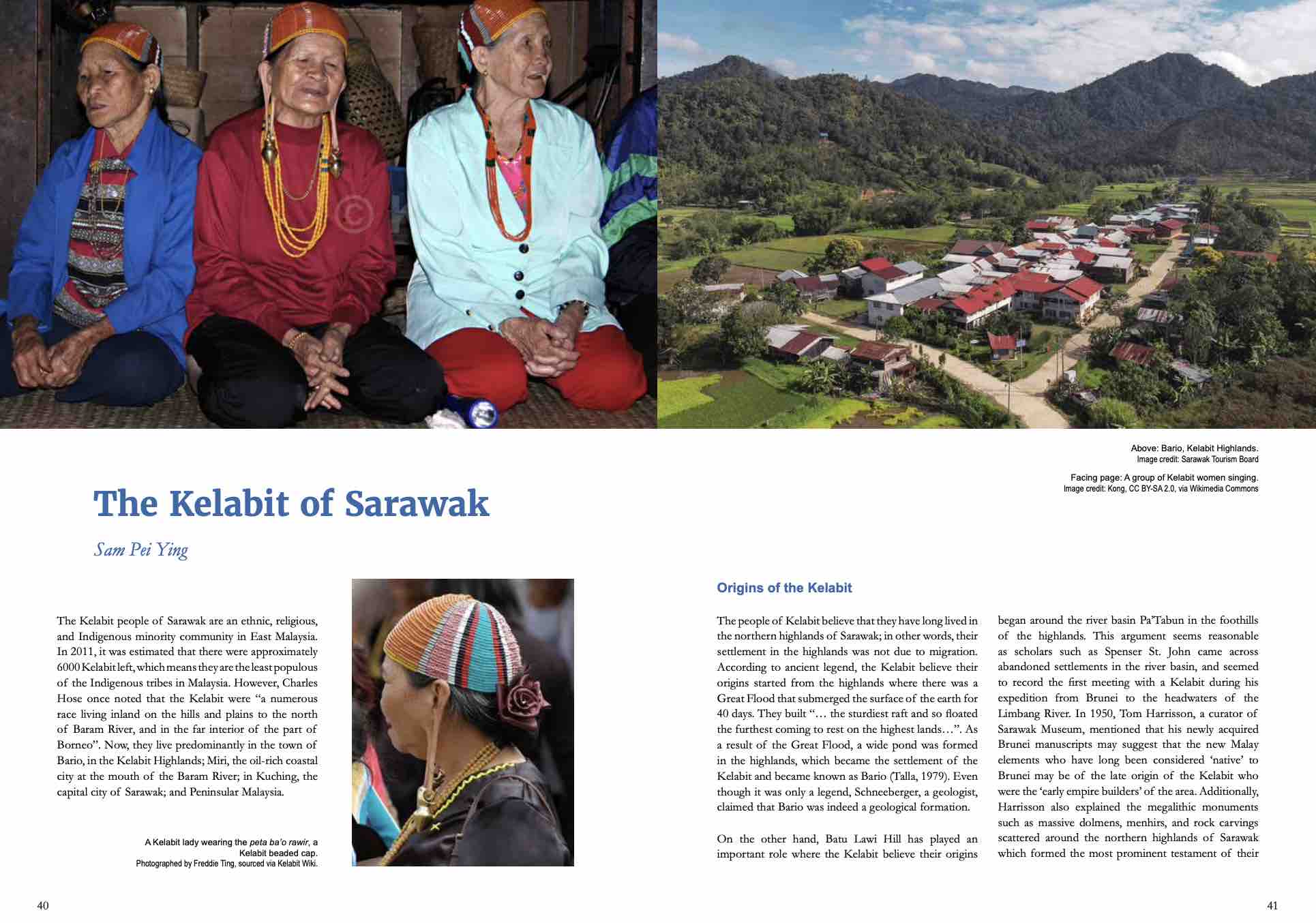
The Kelabits have a pastoral way of life that was once the norm throughout the region.
Several articles focus on groups within the Chinese diaspora such as the majie (female household servants employed by European families in British Malaya), the Hakkas, the Hui or Chinese Muslims, and the Hainanese.
There are so many good references here, useful for our editor’s research on her latest book. Congratulations to Afidah Rahim and her team of museum volunteers for keeping this editorial effort running.
More on Muzings
- Muzings: MV Digest Issue 5 2024 (PDF and online magazine)
- Five Minutes With: Afidah Rahim, President, Museum Volunteers, Department of Museums Malaysia (Story Of Books, 14 June 2024)
Third culture and ancient culture: Pachinko and Ancient Kedah
We just finished reading two books: Pachinko by Min Jin Lee (Grand Central Publishing) and Ancient Kedah: History, Archaeology & New Narratives by Nasha Rodziadi Khaw, Nazarudin Zainun and Suresh Narayanen (University Sains Malaysia & Think City).
Pachinko, the 2017 epic novel about three generations of a Korean Japanese family, comes in three sections, each representing a generation of the Baek family. The book is better than the Apple+ TV series, which is a compliment because the trilingual screen adaption is also brilliant (read our review).
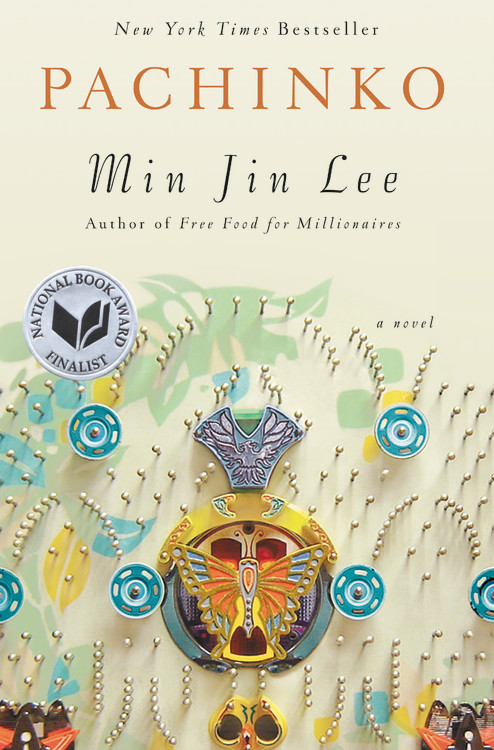
Ancient Kedah, published in Malay and English, is a non-fiction that catalogues the artefacts discovered in and around Bujang Valley, as well as in its former territory that ran from south of Thailand to Beruas, North Perak, Malaysia. We bought it at Areca Books in Penang during the George Town Literary Festival 2024. We will discuss more on this book in our next edition of book news.

- Pachinko (Hachette / Grand Central Publishing)
- On Areca Books: Kedah Tua / Ancient Kedah (Universiti Sains Malaysia & Thinkcity)
- George Town Literary Festival 2024




 Story Of Books