
US tariffs, book supply chain and the need for print-on-demand
This story has two parts. The first is about the US 25% tariff on imports from Canada, China and Mexico – and what it’s doing to books. And how print-on-demand can help. The second part is about where the ASEAN book industry is in the face of tariffs and sanctions – and why they should invest in a print-on-demand model now.
Who gets hurt by tariffs?
Although the US tariff might hurt the book industry in Canada, a lot of printing is done in the US, Publishers Weekly reported. But then, a lot of the paper comes from Canada. The trade news magazine detailed: “The US imported $1.82 billion of uncoated paper, some of which is used in books, in 2023… with 67% of that paper coming from Canada.”
Pop culture news website Bleeding Cool reported that the tariff might lead to the increase in comic book prices in the US. Publishers told the news outlet that they print in China because they can do large collections cheaper. But they also said it isn’t just about the cost. Overseas printers also offer options that the US presses could not meet in terms of binding, paper quality and foil techniques.
The parties likely to get affected negatively by the tariff are:
- Publishers of special-edition hardcover books.
- Romantasy books, which lean towards hardcover.
- Producers of stationery items that utilise specialist papers and foil stamping (think illustrated bookmarks with fancy golden hot stamping).
- Comic and manga fans in the US.
- Small- and medium-sized comic and manga publishers.
- The packaging sector which utilises paper, plastic and metal.
Who wins?
But the situation could also create opportunities for:
- Big publishers with wide profit margins.
- Digital printers, especially those within the print-on-demand model.
Publishers Weekly explained: “Printers have insisted that their capacity has increased, and that they are willing to work with publishers to find ways to manufacture books in the U.S. affordably. The tariffs, some printers suggested, could also prove a boon to digital printers, which have also upped capacity in recent years. Ingram, for example, has suggested to some Canadian publishers whose books it distributes to use its print on demand service, Lightning Source.”
- Smugglers of comic books.
Bleeding Cool highlights the concern that some retailers might be tempted to smuggle items across the border from Canada to the US.
Job protection is cited as the reason behind the tariff – a support to the working class. But as comic publisher Eric Reynolds, Fantagraphics, said to Bleeding Cool, it’s not as if the tariff will immediately reinvigorate the US printing press. That might take years. In the meantime, damage might be done to the industry.

It’s not as if the tariff will immediately reinvigorate the US printing press. That might take years. In the meantime, damage might be done to the industry.
So where is Asean at in terms of print-on-demand?
Except for Singapore, which has an Amazon online presence and therefore allows authors to publish print-on-demand via Amazon KDP, neighbouring Indonesia and Malaysia don’t have a print-on-demand model for book publishing. Not at the scale and flexibility offered by Amazon, despite the countries’ combined population of 300 million.
There are other global brands apart from Amazon that offer print-on-demand such as IngramSpark and Blurb. The question is: why aren’t technology providers like them widely available in ASEAN?
If it’s hard to place the book in a shop, why not make it easy to sell it online?
Case in point: Malaysia, projected to be a high-income status nation by 2028. It’s hard for independent authors and publishers to produce their books. To secure distribution in retail outlets and libraries, they have to appoint a licensed distributor. The licensed distributors don’t offer a print-on-demand model. They distribute but the cost of printing, shipment and storage are shouldered by the author and independent publishers.
Alternatively, an author can avoid the costs by waiving his copyright, signing up with a publisher that also distributes his books. The problem arises when the author is thinking of extending the lifecycle of the work. Or when the publisher loses interest in promoting that work. Without a good contract that includes exemptions and break clauses such as rights reversal, the author might lose his copyright.
There are licensed distributors-cum-publishers in Malaysia that are highly aware of print-on-demand. Sadly, they can’t offer it because they don’t have the capital and technology to support the e-fulfilment. If publishers still get visits from the authorities for featuring titles deemed ‘unsafe’ to the public, when do they get the time to focus on new business development such as print-on-demand?
Compared with the UK model, the supply chain in Malaysia is still in its infancy despite the prevalence of e-wallets, logistics-driven business models such as e-hailing (taxi), food delivery and e-commerce.
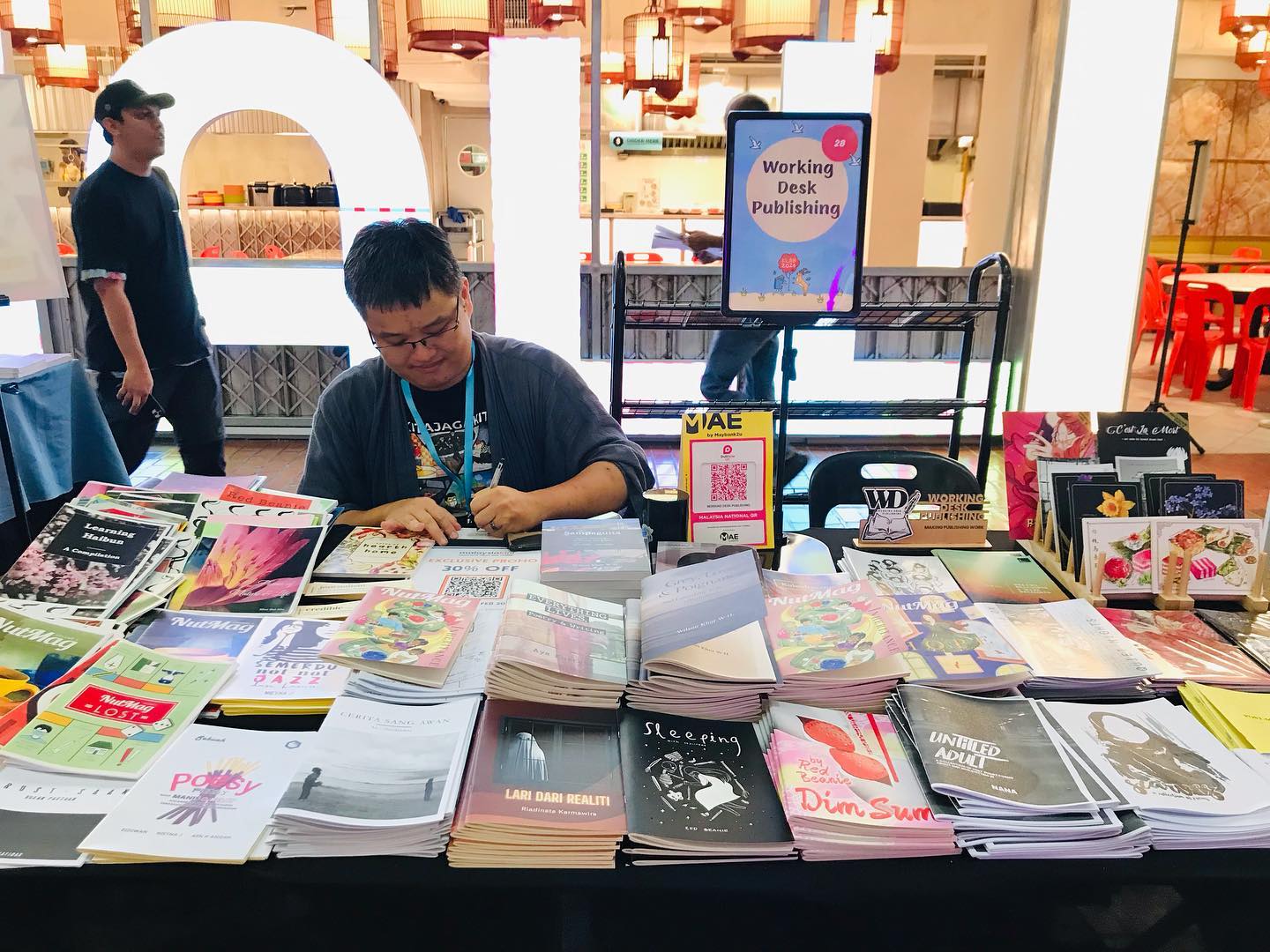
There are licensed distributors-cum-publishers in Malaysia that are highly aware of print-on-demand. Sadly, they can’t offer it because they don’t have the capital and technology to support the e-fulfilment.
Print-on-demand: the ingredient
To have a print-on-demand model, you need:
- Governance: A regulatory framework that covers intellectual property (IP) including copyrights, digital rights management (DRM), GDPR, payment compliance (anti-money laundering), customer charter and insurance.
- Knowledge on industry concepts such as Enterprise Resource Planning (ERP), Warehouse Management System (WMS), just-in-time, print-on-demand, marketing automation and digital publishing.
- IT and e-commerce infrastructure: data centre, shop platform and secure payment.
- Support from the government, information technology professionals (such as librarians) and publishing academics globally to design policies, to identify opportunities and streamline processes for the ASEAN public such as application for ISBN, ISSN, categorisation of books, library submission and so on.
The argument for sustainable development
Using local digital printers (i.e. the nearest location to the print request) is more sustainable than ordering prints from abroad. Print-on-demand, when handled well, will not cannibalise traditional publishers. Instead, it will give them an extra revenue stream. It can benefit the local printers as well. If there are concerns, unions and associations of printers, publishers and writers should get together and discuss this with the government and policymakers.
So why not have print-on-demand? It’s a policy, a business model and a technological innovation that support the production of local literature, reinforce our cultural identity and encourage the digital business economy.











 Story Of Books