When the Strokes took to the stage at Coachella in April 2026 and ended their set with a video showing the last university in Gaza bombed, the reaction of pop culture fandom was a bit like when they watched the last two episodes of Andor: “Is that mainstream now? It’s not something we keep in our head anymore?”.
Source: Al Jazeera English
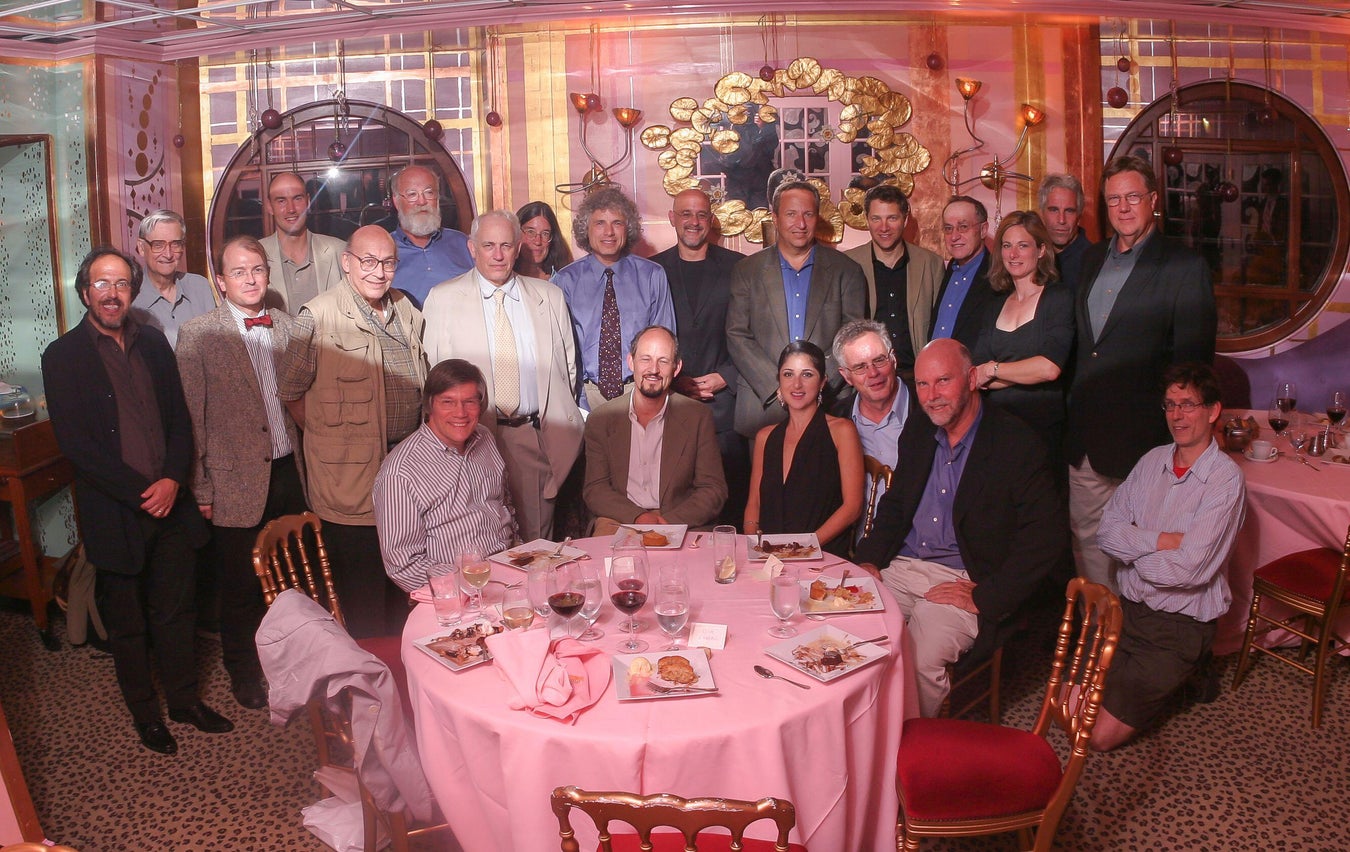
As traditional diplomacy falters and mainstream news creates a one-sided narrative, the marginalised, the cancelled and the sanctioned resort to pop culture. They use the vernacular to mock their opponent, at the same time playing down the severity of the situation through humour. This is what the Epstein class of world leaders and academics left them with, and that’s what the underdogs ran away with.
Epstein and his scientist friends. Image source: Scientific American
The man in the Dragon Ball Z T-shirt
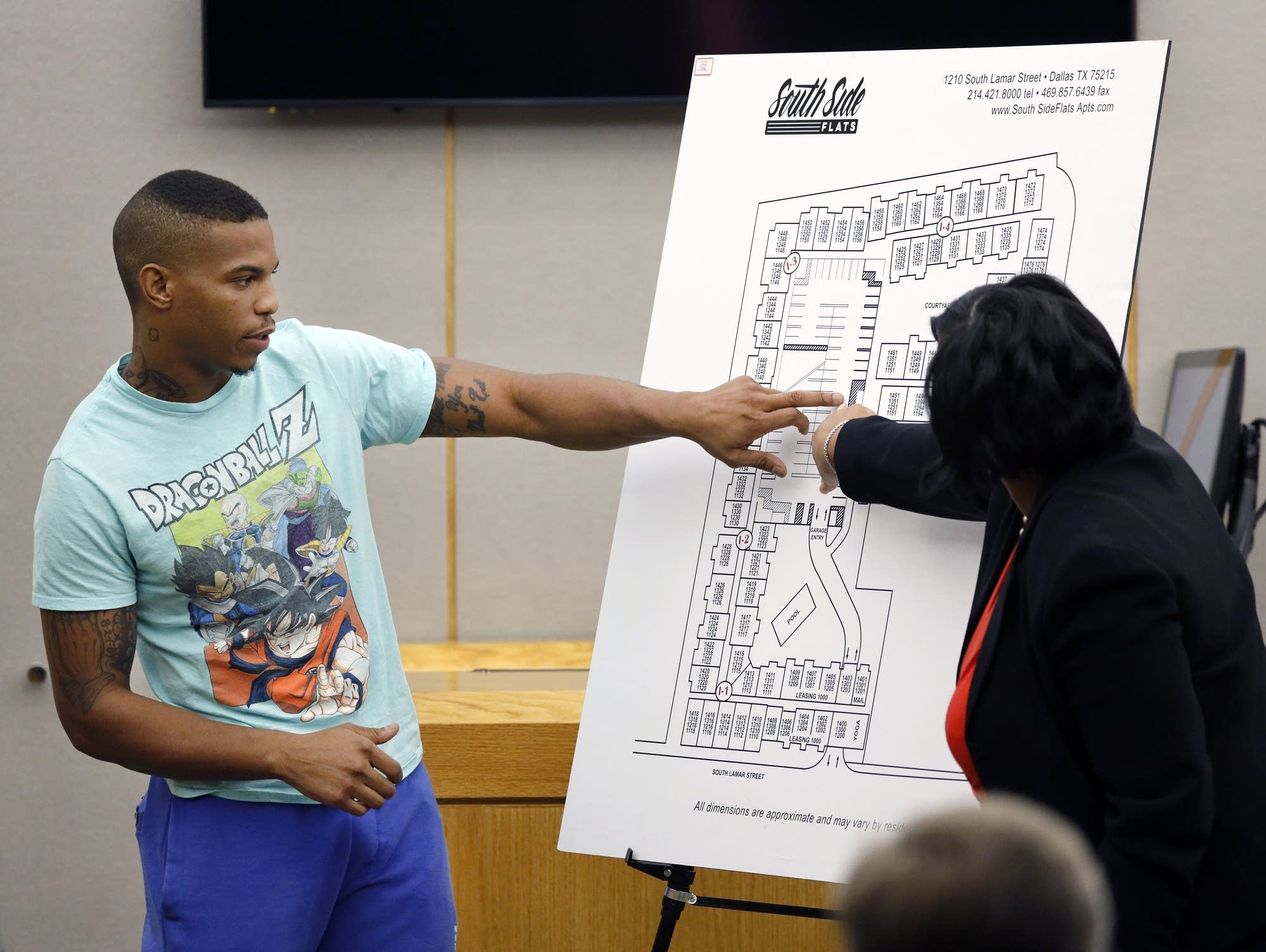
Dissent’s relationship with pop culture is long established in the anime fandom. When Joshua Xavier Brown testified in 2019 in the murder trial of Amber Guyger, he wore a Dragon Ball Z t-shirt. Guyger, a Texan policewoman, was found guilty for murdering Brown’s neighbour, 26-year-old black accountant Botham Jean. She went into Jean’s apartment – allegedly by mistake – and shot him. Barely a month later, Brown was shot dead in the car park of his apartment. His murder caught the attention of the American public. His Dragon Ball Z t-shirt stays in the memory of fandom. They knew what it stands for: the fight of good over evil.
“As traditional diplomacy falters and mainstream news creates a one-sided narrative, the marginalised, the cancelled and the sanctioned resort to pop culture.”

The birth of #SEAblings
Anime unwittingly had a starring role in the Jakarta riots in August 2025. Affan Kurniawan, a rider for Grab, was run over by a police four-wheel drive on his way to deliver a food order. The incident, caught on a mobile phone, sparked more riots across Indonesia. And that was when the Jolly Roger pirate flag from the Japanese manga and anime One Piece made headlines. The flag resurfaced in Nepal, the Philippines and France, where young people staged protests against corruption.
The protests were also expressed through a new aesthetic of Brave Pink and Hero Green that permeated throughout social media.
We saw the Straw Hat cosplayers at MCM Comic Con London in October 2025. Not many of them, but they were there. CNN thinks the presence of the flag at the riots are “bizarre”. It’s not. Fandom gets the message: the Straw Hat Fleet stands up to injustice. The event in Jakarta was an important milestone in Asian pop culture, where cultural diplomacy is concerned. It gave rise to an online movement called #SEAblings which began with customers across Asean nations ordering foods in Indonesia to help Indonesian Grab riders.
Months later, this movement rose again when Asean was trolled by South Korean netizens over a K-pop concert. It was participated by the internet users from Southeast Asian nations including Malaysia, Indonesia, the Philippines, Thailand and Vietnam.
Having the last laugh
At times, direct action comes from a place you least expect. The Onion, a US satirical news outlet, successfully acquired right wing media website Infowar run by conspiracy theorist Alex Jones. Rather than shutting it down, the Onion planned to turn it into a parody of itself.
This acquisition is significant to the families of 2012 Sandy Hook shooting victims. Jones spent years claiming on Infowar that the shooting was a hoax. His platform is being turned into a comedy website, a profound closure and retribution for many.
In short, it’s a scenario where toxic, weaponised conspiracy theories are being transformed into ridicule, delivered by the masters of satire.

“We’re now living in a world where pop culture can be used as a strategic subversion against the establishment or a stronger opponent – a form of informational warfare.”
A war of words
On 28 February 2026, a series of US missile attacks on Minab, Iran, killed 155 people, predominantly children and school staff. These were 73 boys, 47 girls, 26 teachers, seven parents, a school bus driver and another person.
In the aftermath, the conflict transitions from physical warfare to a sophisticated digital and psychological battlefield. Whilst President Donald Trump tries to abstract the bombings by dehumanising the opponents (Trump defends targeting Iran’s infrastructure, calls Iranians “animals”, Middle East Monitor, 7 April 2025), Iran counters not just with traditional rhetoric and arsenals, but with social media. They use global pop culture symbols and AI-generated Lego videos to humanise the victims and dismantle US narratives.
Iranian media highlighted the mundane: anime-themed water bottles and cartoon-themed backpacks. By doing so, they portrayed the victims as innocent people, not as geopolitical casualties. It worked. The world sees the Iranian point of view, and The Strokes mentioned the Lego videos at Coachella.
One common Asian language
This also highlights an important cultural bridge between East Asia and West Asia through the shared consumption of media. The tweet from a Japanese observer proves the efficacy of Iran’s strategy. By recognising a cartoon on nine-year-old Mikael Mirdorarghi’s water bottle and noting his physical resemblance and friendly wave to their own children, the Japanese citizen expresses their empathy. They lament that their own taxes are funding war. This emphasises how manga, anime and localised pop culture operate as a shared, pan-Asian emotional language.
“On the upside, when used to promote peace, pop culture bridges deep-seated historical divides and transforms how state institutions communicate with the public.”
Charm offensive
SEAblings dominated the headlines again barely six months after the Jakarta incident. In February 2026, the K-pop group DAY6 held a concert in Malaysia. A South Korean fan site master violated an existing ban by bringing professional cameras into the venue. The Malaysians criticised them on social media, sharing the images of the culprits. A small number of South Korean netizens (Knetz) responded with racist attacks, mocking the facial features and darker skin tones of Southeast Asians. One posted a viral tweet comparing an angry Southeast Asian woman to a chimpanzee, which garnered 1.8 million views.
The SEAblings mobilised. They trolled and called for an Asean boycott of South Korean exports in all their forms.
The strong solidarity among the SEAblings surprised many who weren’t familiar with the shared cultural identity of the Asean nations before Western colonisation. They have a different dynamic from the historically complex and tense ties amongst the East Asian powers, namely South Korea, China and Japan.
The tension was only de-escalated a month later in March 2026 with K-pop group MONSTA-X’s concert in Malaysia, part of their X-NEXUS Asian tour. To mend the rift, the fandom – the MONBEBE – and organisers executed a highly successful charm offensive. Fans and concert staff were on their best behaviour. The band’s roadies checked out the fans waiting outside before the concert. Video clips of the concert were systematically shared online. MONBEBE ensured they went viral quickly. The concert passed without any online or offline incidents. This positivity carried over to the next tour stop in Indonesia.
This disciplined showcase of global fandom rapport contributed to MONSTA-X winning the Top Touring Artist award at the Asia Star Entertainer Awards (ASEA) in Japan in May 2026, where member Chae Hyungwon dedicated the honour to the MONBEBE.
“The tension was only de-escalated a month later in March 2026 with K-pop group MONSTA-X’s concert in Malaysia, part of their X-NEXUS Asian tour.”
The responsibility of fandom
What we’re seeing now is a shifting landscape where global fandoms and pop culture have become powerful instruments of cultural diplomacy. Fandoms are aware of their collective power. Their actions are a form of diplomacy.
In April 2026, the Japanese BTS ARMY sang Arirang back to BTS during a Tokyo concert. It’s a traditional Korean song historically banned during the Japanese occupation of Korea. This gesture was watched across East and Southeast Asia. The region’s so-called ‘silence’ signals a respectful acknowledgment of the gesture. Where traditional politics stall, pop culture can facilitate. It raises hope for reconciliation and a collective questioning of whether the region is ready to heal and move on.
Recognising the trend, official government ministries in Asia with rigid or tough reputations like military and law enforcement bodies are adopting pop culture trends to present a softer face of themselves. The aim is to nurture trust. The South Korean Navy performed a BTS dance challenge that could have upstaged BTS themselves….
… Whilst the Singapore Prison Service rolled out a humorous video on Tiktok to tell you know they have your undivided attention:
We’re now living in a world where pop culture can be used as a strategic subversion against the establishment or a stronger opponent – a form of informational warfare. On the upside, when used to promote peace, pop culture bridges deep-seated historical divides and transforms how state institutions communicate with the public. This change is driven bottom up, largely by the proactive responsibility of modern fandoms.
“Where traditional politics stall, pop culture can facilitate. It raises hope for reconciliation and a collective questioning of whether the region is ready to heal and move on.”